A Pilgrim Feast
How feasting can be more difficult than fasting and what we can do about it


Alleluia! Christ is risen!
The Lord is risen indeed, alleluia! Happy Feast of the Resurrection, friends! This week marks the beginning of 50 days of feasting that begins at Easter and ends after Pentecost. After 40 days of Lenten fasting - especially if you practice a total fast over Good Friday - the thought and smell of the feast on Holy Saturday is almost too much to bear and fills my mind at least with daydreams of days upon days of feasting.
But two full days in, and I’m already wearying of the feast.
Don’t get me wrong - I’m still joyfully shouting “Alleluia” at any opportunity I’m given. I’m still giddy about the Easter acclamation “CHRIST IS RISEN!” and continue finding myself delighting in the theme of Christ’s defeat of death and His resurrection.
However, I’m finding that feasting, as Richard Foster has so aptly observed, is every bit as much of a Christian spiritual discipline as fasting is… and in some ways, I think I find fasting to be the easier discipline. I’d like to invite you to explore with me why that is.
Festal and ferial
But first of all, a brief word on feasting and fasting - the festal and ferial practices of the Church. It is significant that Christians are people of both disciplines. Fasting rightly directs our attention away from the dilutions and distractions that divert our eyes from just how broken and in need of redemption we and our world truly are.1 Around noon every fast day, when I would normally be eating, I find myself bored. Instagram becomes more of a temptation, or catching up on the news (my news consumption definitely increased this past Lent as I gave up Instagram), because the quietness that abstaining from a meal brings inevitably allows to the surface the voices of anxiety, fear, depression, anger, lust, and whatever else may contribute to the constant hum of background noise in my heart. And I am faced with the choice either to face that cacophony of brokenness and bring it to the Lord, or to seek further distraction.
Fasting brings us face to face with our brokenness and with the choice either to engage and seek redemption, or to find yet more sources of distraction. Of course the goal is to do the latter, which is why fasting has always preceded high holy days as a means of preparation. As Christians, we need this practice.
Feasting, however, demands that we recognize that the world is not only broken and in need of redemption, but that God’s work of redemption is already at hand. For all its darkness, the world is still more beautiful yet, because God in the beginning called it “good,” and God now is working to make it “very good.” Feasting is a brazen act of hope in a world that demands that we resign to hopelessness. We Christians also cannot do without this practice of hope, precisely because the voice of despair sounds so loud and, if we’re honest, often rings all too true in our hearts. This is the first reason that I believe feasting is a more difficult discipline than fasting.
While fasting is physically and mentally demanding, it at least goes along with the grain of this world. While it may not be comfortable to do so, it does not take any great effort to see just how woefully broken and dark this world is. It is not difficult to sense the sin and selfishness in our souls and express our guilt over it. In fact, for most of us it is so easy to do this that we either live our lives in constant denial of the despair that nevertheless lingers in our peripheries at every moment, or we actively embrace it and pull the shroud of despair around us like a blanket. Fasting takes little to no prophetic imagination to see the purpose of the practice: so obvious is the brokenness of our world.
On the other hand, it does take a good deal of prophetic imagination to feast. We Christians have the audacity to spend 40 days in lament and fasting, coming to terms with our active complicity with the brokenness and darkness of our world, only to turn, on the head of a dime, some Saturday night, and rejoice.

Feasting as discipline
This past Holy Saturday it was raining, as it always is this time of year in Vancouver. It was dreary, dark, cold, and unpleasant - a very fitting atmosphere for the day of fasting that marks the day that God Himself in Christ Jesus lay dead in the tomb. Inside the church the lights were turned off and we heard readings and chants recited in the darkness reminiscent of the Holy Sepulcher. From the outside looking in, it may have looked entirely arbitrary that at one moment on this particular Saturday evening, I and a group of some 20-30 faithful turned on the lights and shouted “Alleluia, Christ is risen! The Lord is risen indeed, alleluia!”
The rain hadn’t stopped, the sun hadn’t burst through the clouds, those who lost loved ones in the past year weren’t suddenly restored their deceased - in practical terms, nothing was different. Blocks away, those forced out of their homes by an out of control real estate market still sat soaked on a sidewalk thinking only of their next fix, the hospital was still filled with the sick and dying, the environment continued to degrade seemingly beyond repair, the soil of the graveyard was left undisturbed by any promised general resurrection. And yet, we, like the millions of other followers of Jesus on that night, had the audacity to say, “Alleluia.”
This is why feasting is difficult. It takes guts, it takes audacity, it takes bravery to say with Samwise Gamgee, despite all evidence to the contrary, that “all the bad things are coming untrue.” To say so in the face of all contrary evidence feels like a risk, and thus renders us vulnerable. No one will look at our fasting and say we’re wrong to lament any brokenness in our world because that brokenness is plainly evident to all. However, just about everyone - including ourselves at times! - is likely to decry our feasting in hope of redemption as naive, deluded, stupid, even irresponsible.
In the Easter homily I heard on Saturday night, the preacher declared that because Jesus rose from the grave, we will be resurrected someday too. And there’s the rub. “Someday.” Lent sets us neatly in the the exact spot in which we actually are: in a broken world in need of redemption. It’s uncomfortable, but it’s fitting. It takes little to no faith or hope to recognize where we are; the darkness is plain to see. Easter, however, sets us in incongruence: a hope of resurrection someday in a dead and dying world.
In my opinion it takes less courage to face the darkness than it does to dare to hope in the face of that darkness. And that is precisely what we do when we feast for 50 days every Eastertide. We dare to hope despite all evidence to the contrary, and on the basis of that hope, we feast. On the surface of things, nothing has changed. To our neighbors who don’t know Jesus, it appears to them that nothing has changed. By all accounts besides the account of hope, nothing has changed. The evidence of an unchanged world consigned to death and destruction seems, even to us Christians at times, to be insurmountable and overwhelming, and that is why feasting is a discipline.
And that is precisely why we absolutely must keep the feast. Feasting is an act of defiance in the face of a world that has resigned itself to death and decay.

Feasting as defiance
It is precisely the fact that feasting is an act of defiance against the present world order that occasions the second reason why feasting is difficult. Satan hates our feast. If feasting really is an act of defiance against the world’s despair and Satan’s work to ensure that despair, then feasting joins us to Jesus’ work of harrowing hell. When we feast, not only do we get a foretaste of the wedding supper of the Lamb, but we do so, as the psalmist says, “in the presence of my enemies.” We walk in the shadow of death - no, more than that: we stand behind Jesus as He kicks down the doors of hell and he sits us down to sup at a sumptuous dinner that He prepares there for us in the presence of our enemies. Satan, as you can imagine, hates this, and will do whatever he can, bound as he is, to spoil the festivities.
What makes feasting difficult is spiritual warfare.
To be sure, the devil hates our fasting, too. There are few better ways to practice rejecting the world, the flesh and the devil than by making a regular habit of intentional, prayerful fasting. However, Christian fasting must always, always leads to feasting, because without the feast, the fast is only morbidity and self-absorption. If we face our sins and the darkness of this world without ever turning to receive God’s grace, not only have we lost the purpose of the fast, not completed our fast, but we have actually allowed Satan to co-opt our fast into an instrument of despair. Feasting saves us from this, and puts the devil in his place. There is and must be a time to fast, to face and lament the darkness in our world and in our hearts, but there also must be the feast and to follow where we receive and enter into God’s grace.
For this reason, we should expect spiritual attack as we feast. We feast for Easter now not only as a proclamation of Christ’s victory but as a participation in it. We feast now in the assurance that Jesus has won, that He is making all things new, that death does not have the last word, and thus and only thus do we have hope. And so certain is this hope that we dare to feast by candlelight in the midst of and to spite the present darkness.
Like the Narnians caught feasting while the Witch rampaged against the coming of spring - and more importantly, of Aslan - we feast in the midst of great peril. Like the Israelites freshly returned from exile who feasted and set their hands to rebuild the wall with swords at their sides, we feast with hearts and minds alert to the threat that looms just beyond the table’s reach. We feast with spines tingling. While the Lord lays out a table in the presence of our enemies and we fear no evil, we also are not unaware of the devil’s schemes.
We feast in keen awareness that though this feast is a foretaste of the Wedding Supper at which the Father will make the Lord’s enemies a footstool for His feet, this is still yet but a foretaste. We have not yet arrived home fully, though the Lord is gracious to give us not just food for the way, but a sumptuous feast for the way. This is, indeed, a pilgrim feast. Alleluia. Let us keep the feast!
Practice makes perfect
So we see that feasting is a discipline, a practice, of hope. All well and good, but if we’re honest most of us probably didn’t show up to the Easter feast this past weekend brimming with hope. Whatever else you brought to the table (pun intended), you probably also brought an unhealthy helping of fear, anxiety, despair, hopelessness, anger, sadness and whatever else. As I implied above, the circumstances in our lives that give substance to the darkness of this world do not disappear at the Easter acclamation. The darkness in our own hearts that we fought all Lent didn’t magically disappear with the shouts of alleluia.
You may have read the above and felt that you’re left standing just outside the circle of light surrounding the Paschal feast. If you feast at all, you do so half-heartedly or by rote. Yes, you recognize, if only mentally, that “Christ has died, Christ is risen, and Christ will come again” to make all things new, but this proclamation does not sit well with you. You hear that feasting is a practice of hope and despair of the feast altogether because there is some corner of your life, perhaps, that you feel truly is hopeless.
First of all I want you to hear that it’s ok for you to feel that way. In fact, it’s normal. To some degree or another all of us come to the Easter feast this way. We are not yet perfect. We are still given to sin and despair. We still harbor resentments and wounds. A week after Jesus rose from the dead and appeared to His disciples they were still locked away in the upper room because they were afraid of the authorities. You are not alone.
In fact, second of all, I have good news for you. The fact that feasting is a practice of hope, by definition means that you will be bad at it when you begin. If we have to practice something it’s because we have room to grow. That God gave us feasting as a discipline meant that He knew beforehand that we would struggle to hope and he wanted to give us some scratch paper to try our hand at it. We don’t wait to practice something until we’re good at it. We practice in order to become good.

Practice makes perfect, as they say. We do not simply practice feasting because we hope. No, we practice feating to get better at hoping. We could even say that we hope because we feast.
This is not a new idea. For example, studies show that if you’re feeling down and put on a fake smile for 8 seconds, you’ll start feeling better. Not only does smiling express happiness, but the physical act of smiling actually triggers your brain to experience happiness. This is similar to a concept in social psychology called cognitive dissonance, which arose from multitudes of studies demonstrating that when someone is faced with a contradiction between their beliefs and their actions, their actions will change their beliefs rather than their beliefs changing their actions.
Just like smiling doesn’t just express but also inspires happiness, feasting doesn’t only express hope but actually inspires it. If you don’t feel hopeful, the best medicine could be to feast. Likewise, if you have some stubborn beliefs that the world is ultimately hopeless (no matter how much you also simultaneously believe the Gospel), and you make a regular habit of feasting, you’ll inspire some cognitive dissonance in yourself, and chances are that the habit of feasting will win out over your hopelessness.
In a word, God doesn’t expect you to come to the table every Sunday brimming with hope. In fact, He knows better and expects that the opposite will be true more often than not. He gave us the discipline of feasting not (only) as an expression of hope, but as a means to grow in our ability to hope.
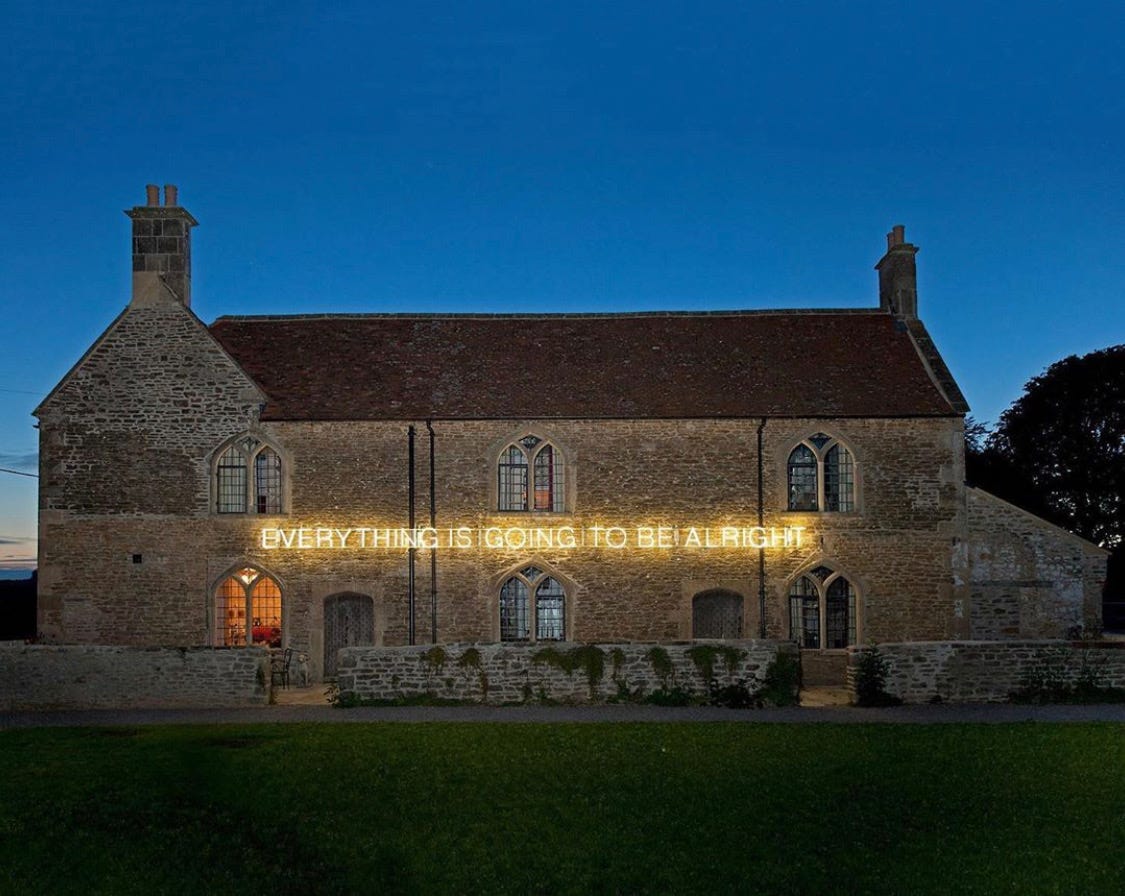
This is not a matter of “grin and bear it,” or some Pollyanna-esque toxic positivity. We should never come to the feast condemning anyone for weeping at the table; we should rather join them, hold them, weep with them, and comment through the tears that this may be the best Beef Wellington we’ve ever had. Feasting doesn’t mean checking the darkness at the door or somehow papering over the brokenness of our lives. It is to hold these things with clenched fists and teeth to the Lord in one hand as He places a glass of well-aged wine into the other. It means holding the tension. It means saying with Blessed Julian of Norwich as the Black Plague raged all around her, “All shall be well, and all shall be well, and all manner of things shall be well.”
A few guidelines to a good feast
All of the foregoing said, here are some guidelines to practicing a good feast:
Feast to the Lord. This may go without saying, but it is worth saying, and all that follows flow from this. The world feasts in a way, as for those of means time is an uninterrupted feast, a falsely realized and godless eschaton, and the only fast it knows is the calorie deficit of the dieters on the one hand and the starvation of the oppressed on the other. Simply to eat lots of good food and drink good drink is not to feast. Give thanks to the Lord for the table He has set before you, and find ways to practice awareness that the feast is communion with Him as He joins us at table, though He is not yet seen.
Feast in gratitude. This feast comes after an intense season of Lenten fasting. Take some time as an individual and as a community to reflect over food and drink about what God has done in and through you this past Lent, and give thanks and praise to Him for it.
Feast in community. Some cultures won’t allow an individual even to eat at all when they are alone. Feasting is a communal activity, as feast as a Christian discipline is always a practice session for the wedding supper of the lamb, when every tribe and tongue will gather at one table. If you single, find family, friends, and/or church groups to feast with this Eastertide. If you are not single, discern as a family who you can invite to join your feasting who otherwise may not have anyone.
Feast with eyes wide open. Again, Satan hates our feasting and will attempt to disrupt it. It is tempting after the intensity of Lent and Holy Week to relax a bit in our prayer habits, but it is perilous to do so. Redouble your prayer discipline and pay attention to where the enemy may be tempting and attack you, your family, and your church community, and respond in prayer, reconciliation, and deeper fellowship with God’s people.
Feast in moderation. This may seem counterintuitive, but gluttony and drunkenness are still sins even in Eastertide. Be especially careful about alcohol if you fasted from drinking during Lent, as your tolerance will have decreased. Ease in, be wise, and if you need to feast on quality rather than quantity. Sharing with community helps with this as well. If you have questions about what feasting in moderation looks like for you, talk to your spiritual director or confessor.
Feast creatively. Come up with creative ways to put these guidelines into practice. Is there a special prayer that you and your family or community can say before meals specifically for Eastertide? Is there a certain food or drink that maybe you can reserve only for this season each year? Is there a way for your family or community to mark your stand with Christ against the devil and his works?
In sum, feasting truly is a discipline, and it is one of the, if not the, essential and characteristic discipline of the Christian faith. That doesn’t mean that we’ll naturally be good at it - quite the contrary, in fact. Like any practice, feasting takes just that - practice. But as we practice feasting, I am convinced that we will see ourselves, our souls and bodies, transformed, not to mention the world in the midst of which we feast. Amen. Let us keep the feast!
As I mentioned in a previous post, fasting does show us the goodness of the body, indeed, but it shows us this goodness in the midst of brokenness.